Category: Planning

  • The Importance of Release Planning in the Music Industry

    Understanding the intricacies of record label release planning can feel daunting. But guess what? It doesn’t have to be. You’re about to dive into the nuts and bolts of the process, unravelling the mystery behind successful releases.

    Have you ever wondered how top record labels consistently hit the charts? Or how they manage to create such buzz around their releases? Well, the secret lies in meticulous release planning. It’s not just about dropping a hit track; it’s about strategic timing, marketing, and understanding your audience.

    So, whether you’re a budding label looking to make your mark or an established one aiming to stay on top, mastering the art of release planning is crucial. Let’s embark on this journey together, and by the end, you’ll be equipped with the know-how to plan forthcoming releases. 

    What is Record Label Release Planning?

    Record label release planning isn’t some vague or complicated concept. Think of it as the blueprint needed to build a successful record. It’s a step-by-step guide designed to help streamline your record’s path from the recording studio to the listener’s speakers.

    But let’s get into the nitty-gritty:

    • It starts with choosing the right music to release. Remember, the music isn’t just about the artist; it’s about the audience, too. Knowing what your listeners want is a massive part of making compelling music.

    • The next step involves deciding on a suitable release date. Christmas albums in July won’t be a hit. Timing is everything, so synchronize your releases with your audience’s interests and relevant events.

    • Do you have an effective marketing strategy? It’s not enough to just release music. You have to tell people why they need to listen to it. Crafting a compelling story around your music can go a long way.

    • Lastly, you’ll need to engage your audience. From social media to concerts, you’ll need to make a personal connection. Remember, your listeners are more than customers; they’re fans.

    Don’t feel overwhelmed! Tools like ReleaseLoop simplify these steps, helping you manage everything from one place. As you push deeper into record label release planning, you’ll find it’s not so daunting.

    Importance of Record Label Release Planning

    Knowing the nitty-gritty of record label release planning isn’t just important — it’s your backstage pass to the big league. Let’s dive in and explore why it’s something you can’t afford to skimp on.

    Maximizing Sales and Revenue

    When making or breaking an album’s commercial success, timing is everything. You wouldn’t release a summertime anthem in the dead of winter, right? But it’s not just about choosing the right time of year. It’s about dovetailing with global events, avoiding potential clashes with other major releases, and striking while the iron’s hot in your target market. Get this right, and you’re already a step ahead in maximizing sales and driving that sweet revenue.

    Tools like ReleaseLoop can take the guesswork out of this step. These lifesavers help you monitor market trends, anticipate demands, and stay in the loop (pun intended!) with what’s hot and what’s not.

    Building Anticipation and Excitement

    If release planning is a cake, hyped-up fans are your cherry on top. Understand this — Your audience isn’t a ‘one-and-done’ deal. They’re a community, a tribe, and hungry for content. They want teasers, they want exclusives, they want to feel part of the journey.

    Release Planning is your secret weapon. It’s your roadmap to a well-thought-out, strategic marketing campaign that amplifies your reach and cements your status in the music industry. You’ve got the power to create noise, build momentum, and ignite the hype train before your album even hits the initial launch key. Don’t let that power go to waste.

    As you continue to master the art of record label release planning, remember this – Each release is a unique concoction of eclectic artistry and strategic genius. So, keep experimenting and keep pushing the envelope. 

    Key Components of Record Label Release Planning

    The beauty of release planning in the music industry lies in its complexity, a delicate balance of artist management, marketing, and, most importantly, timing. While these elements are noteworthy, ReleaseLoop can simplify the process, helping avoid common pitfalls.

    Setting Goals and Objectives

    One of the most crucial steps in the planning phase is setting your goals and objectives. Are you looking to increase your fans? Or perhaps you want to top the charts? Either way, a well-defined goal can help streamline your efforts while maximizing your returns. Your objectives can influence every other aspect of your release – from the type of marketing you will be involved into the kind of music you will produce.

    Creating a Release Timeline

    Then comes the task of Creating a release timeline. This isn’t a run-of-the-mill kind of timeline. Every detail of the track, from mastering to promoting, needs an assigned date. Timing is everything when it comes to release planning. A well-curated release timeline can make all the difference between a hit song and a lost cause.

    • Decide on a release date: The best time to release can be influenced by factors such as the music type, target audience, and competition.

    • Set marketing dates: Ideally, your marketing campaign should kick off weeks before the release date. This will help build anticipation and ultimately ensure a successful release.

    Budgeting and Resource Allocation

    After setting your timeline, you’ll need to figure out the third puzzle piece – Budgeting and resource allocation. Music production isn’t cheap, and lousy budgeting can quickly spiral into disaster.

    • Determine the Budget: This will mostly depend on the size of your label and the scale of your release. Prioritize your spending based on your goals and the resources needed to reach them.

    • Allocate Resources: From sourcing talent and studio time to marketing campaigns, the associated costs need to be accounted for.

    Marketing and Promotion Strategies

    Lastly, we have Marketing and promotion strategies – the steam that propels your music to your audience’s ears. It’s important to understand that marketing your release is not a one-size-fits-all deal.

    • Who’s your audience? Knowing who will resonate with your music can guide your marketing campaign.

    • How to reach them: This is where you’ll need to decide on promotional strategies.

    Be part of thematic concerts or festivals pertinent to your music genre. Leverage social media platforms to reach a wider audience, network with influencers in your industry, and engage your fans in real time.

    The road to a successful release can be winding, with twists and turns. However, hastily releasing music without a set plan can have dire consequences. So, take your time and find the release planning strategy for your record label. It’s not just about making music; it’s about making music that sells and resonates. Enjoy the journey in the music industry and keep experimenting.

    Best Practices for Effective Record Label Release Planning

    As you continue in the music industry, you’ll encounter various techniques and strategies that drive success. One pivotal component is being organized. By mastering the best practices, you can propel your label to unprecedented heights. Let’s dive in.

    Conducting Market Research

    Understanding your market is crucial. It helps answer critical questions like, “Who is my audience?” “What’s trending right now?” “Is there a demand for my artist’s style of music?” These insights make your planning more strategic. Market research platforms such as Nielsen can be instrumental in collecting these data.

    Building a Strong Artist Brand

    A strong brand identity for your artists can make all the difference. It’s about more than just their music – it’s their persona, their story, their unique appeal. Incorporate every aspect of their identity into your planning, from the album artwork to the tone of their social media posts.

    Collaborating with Influencers and Tastemakers

    Partnering with influencers is a game changer. These individuals can sway their sizable followings and spur an avalanche of interest in your next release. Reach out, collaborate, and facilitate unique content – this helps to elevate your visibility on various platforms.

    Utilizing Social Media and Digital Platforms

    Maximize your presence on all relevant social media and digital platforms. These tools are not just additional channels to push content; they’re interactive spaces to engage with fans and build anticipation. Make sure to leverage live-streaming features, run contests, engage with your audience in the comments and use every feature to hype your upcoming releases.

    Engaging with Fans Through Fan Clubs and Events

    Last but not least, remember the human touch. Fan clubs, gigs, meet-and-greets – these all offer the personal connection that digital platforms can’t fully replicate. They generate enthusiasm among fans that spills over into your online ecosystems. Fan clubs serve as an anchor, nurturing your most dedicated followers and giving them a sense of belonging.

    Your strategies will need to adapt and innovate. Your efforts will not only contribute to your current success but also lay a solid foundation for the many exciting releases to come. Whether you’re a seasoned pro or a newcomer, remain open to fresh ideas and continue pushing your boundaries. After all, there’s no ceiling to what you can achieve in the music world.

    Case Studies of Successful Record Label Release Planning

    In-depth case studies of how renowned artists have executed their release planning can provide valuable lessons to pave the way for your success in the music industry.

    Taylor Swift’s Album Releases

    Taylor Swift exemplifies strategic release planning. Swift and her team spare no effort in building up anticipation. They’ve got fan engagement down to a science. In the lead-up to a record release, Swift spices up her social media with cryptic posts and clues, sparking guesses and speculation from her dedicated fanbase. This extensive, interactive marketing, coupled with her engaging persona, makes her album releases feel like events.

    Swift’s team also understands the importance of timing. When dropping ‘Folklore’ and ‘Evermore’, they released the albums without prior tributes. This unexpected strategy suited the lockdown period when people were starved for fresh content.

    Swift doesn’t just release music. She creates ‘eras’, each with a unique story, style, and presence. You could also make each release stand out, fostering loyalty, excitement, and anticipation among your fans.

    Beyoncé’s Surprise Album Drops

    Beyoncé broke record-label norms in 2013 with the surprise release of her eponymous album. Typically, a meticulously planned pre-release promotion prepares fans for an upcoming album, building hype and tuning them into the artist’s latest work. But Beyoncé bypassed the marketing frenzy, releasing an album without prior announcement. She changed the rules of the game and declared that she wanted the music to speak for itself.

    This bold move paid off spectacularly. A surprise drop from an artist of her calibre spoke volumes about her command over the music industry. Your label could also adapt some of Beyoncé’s style, showing that breaking norms doesn’t mean disappointing fans. Instead, it could even strengthen your brand.

    Drake’s Strategic Release Strategies

    Drake has used strategic release planning to keep his name in light consistently. Drake isn’t just about full-length albums. He heeds the value of mixtapes, EPs, singles, and even guest features. Despite his fame, he’s always game for collabs, understanding how it keeps him relevant in the ever-changing music industry.

    Drake also doesn’t shy away from catering to different types of listeners. You’ll notice a healthy blend of radio-friendly songs, club bangers, and soulful tracks in his albums, hitting all the right spots.

    Drake’s flexibility in track selection and release format reminds you that diversity in your deliveries sets a successful trajectory for your label.

    These case studies underscore the importance of strategic release planning in the music industry. Whether it’s Swift’s fan engagement, Beyoncé’s surprise drops, or Drake’s consistent releases, each strategy is built upon understanding your audience and delivering value every time.

    Conclusion

    You’ve seen how vital release planning is in the music industry. It’s not just about dropping a record; it’s about strategic timing, knowing your audience, and marketing. Whether you’re a newbie or an industry veteran, mastering this art is crucial to success.

    Release planning is a multi-step process involving goal setting, timeline creation, budgeting, and marketing. Tools like ReleaseLoop can make this process easier. Remember, the goal is to maximize sales and revenue, which is achieved by building anticipation among your fans.

    Don’t stop experimenting and pushing boundaries in your release planning. Conduct market research, build a strong artist brand, collaborate with influencers, utilize social media, and engage with fans. Learn from the strategies of successful artists like Taylor Swift, Beyoncé, and Drake. Understand your audience and deliver value.

    In the end, effective record label release planning is about knowing your music, knowing your audience, and knowing how to deliver your music to that audience in the most impactful way. It’s a challenging task, but with careful planning and execution, you can make your mark in the music industry.
  • Optimizing Your Release Schedule for Success in the Music Industry

    Welcome to the world of music release scheduling! You’re about to head into one of the most crucial aspects of the music industry. Have you ever wondered why some songs become hits while others don’t? It’s not just about the melody or lyrics—it’s also about timing.

    Timing is everything in the music industry. It’s not just about when you release your music but also how you schedule your releases. With the right strategy, your music can reach the right ears at the right time. That’s where release scheduling comes in.

    The Importance of Release Scheduling

    Crafting your release schedule is akin to designing a roadmap for your music’s journey. This roadmap, like any other, has specific landmarks that need attention.

    Maximizing Exposure and Fan Engagement

    When releasing music, timing is essential. The best time to drop your new track depends both on the song itself and who you’re targeting.

    For example: 

    Release Radar is a playlist on Spotify that features new releases from artists a user follows or listens to. If someone follows your artist profile, your music will be included in this playlist when it is released. The Release Radar playlist is updated every Friday.

    In terms of fan engagement, social media plays a crucial role. Updates about the process, behind-the-scenes sneak peeks, and countdowns to the release date not only keep your existing audience hooked but potentially pull in new fans as well.

    Remember, different platforms have different peak times for user activity. Mornings and mid-afternoons during weekdays would be good on Facebook, while Twitter sees most action during commute times.

    Avoiding Competition and Overcrowding

    Avoiding overcrowded release dates is another significant component of an effective release strategy. For instance, avoid releasing new music in the same week as an essential artist in your genre.

    Major holidays and festival seasons are hotbeds of new releases, and while the increased listener activity is tempting, your latest release may get lost in the shuffle. Strategically choosing your release date around these times can allow your music to stand out and avoid undue competition.

    Keep a tab on major industry events – award ceremonies, music festivals, etc. These not only dominate media coverage, but listener activity shifts towards these events, too. It’s a double-loss situation – your song hits the market but gets drowned out by the noise. Don’t let this happen.

    Being strategic with your release schedule is an ongoing process. As you learn more about your audience and the industry’s pattern, tweak your release strategy accordingly. Your release schedule is more than just a list of dates- it’s a crucial part of your branding and music’s identity.

    Factors to Consider When Creating a Release Schedule

    Crafting an effective release schedule is not a walk in the park. It takes foresight, strategy, and attention to fine detail. In this part of your journey through the music industry, let’s dig into the three key factors you need to consider when creating a release schedule: timing and seasonality, genre and target audience, and promotional activities and campaigns.

    Timing and Seasonality

    When it comes to release scheduling, timing is everything. It’s not just about selecting a random date and going with it. It would be best to consider the time of the year, peak user activity across different platforms, and competing releases.

    Consider the music listening habits of your target audience. For instance, upbeat summer tracks are naturally a perfect fit for warmer seasons. Meanwhile, heartfelt ballads resonate better during colder months.

    Stay updated with significant industry events and avoid releasing music around these periods. Festival seasons, holidays, or the same week a considerable artist in your genre releases music can cause your tracks to get lost in the shuffle.

    Genre and Target Audience

    Understanding your genre and target audience is crucial. Each genre has its unique patterns of listener engagement.

    For instance, pop music sees more listener activity during the day, while electronic music sees more engagement during late-night hours. Adjusting your music release to align with these patterns can increase your music’s exposure to your target audience.

    Stay in tune with your audience’s preferences—their preferred platforms, peak activity hours, and lifestyle and consumption habits can all guide your release schedule.

    Promotional Activities and Campaigns

    Promotion is vital in maximizing your launch. Garnering publicity doesn’t just happen overnight. It requires a comprehensive promotional strategy that extends beyond the release date.

    Create hype on social media leading up to the release. Share exclusive sneak peeks and behind-the-scenes content, and count down to the big day. These promotional activities can whip your existing fans into a frenzy and help attract new ones.

    The life of a track extends well beyond its release date. So, maintaining regular post-release promotions—like promotional interviews and high-energy music videos—can keep your audience engaged and your music relevant.

    Creating a music release schedule is more than just marking dates on a calendar. It’s about assembling a roadmap that takes your music into the world. Be strategic. Be mindful. And always be ready to tweak your approach based on trends and patterns in the landscape. After all, it’s your music’s journey—make sure it’s set up for success.

    Strategies for Effective Release Scheduling

    Crafting a powerful strategy for your release scheduling can feel like putting together the pieces of a complex puzzle. But don’t sweat it; let’s break down the essentials and make this process a breeze.

    Setting Release Dates Strategically

    Choosing the appropriate release date for your music is critical. You want to own the moment; hence, scheduling your release when your potential audience’s attention is less divided can significantly boost visibility. Keep a close eye on:

    • Major Industry Events: Avoid releasing your music the same weekend as an important event. Your music will be competing with these events for attention.

    • Peak User Activity: Platforms like Spotify and YouTube have peak times when most users are active. Take advantage of these slots, as your music will have a higher chance of getting noticed.

    • Seasonality: Feel the pulse of your audience. Certain music types have better audience engagement during different seasons. Matching your music’s vibe with the season can resonate more with the listeners.

    Utilizing Pre-release Campaigns

    Proactively building up the buzz before the release through pre-release campaigns can give your music a head start. It’s all about creating and maintaining anticipation among your audience. Consider:

    • Social Media Teasers: Teasing snippets or behind-the-scenes exclusives piques your audience’s curiosity and can also attract a fresh set of listeners.

    • Engaging Countdowns: An interesting countdown across your digital profiles helps keep your music on top of mind as the release date approaches.

    Remember, the goal of a pre-release campaign is not only about maintaining the buzz but also about making each audience member feel a part of your journey.

    Collaborating with Other Artists and Labels

    Sometimes, the trick to wider reach and amplified visibility lies in collaborations. Teaming up with other artists or labels can lead to:

    • Increased Exposure: This is a chance to showcase your music to their fanbase.

    • Fresh Perspective: Collaborating can bring new creative influences, leading to the crafting of unique music.

    Tackling the music industry may sometimes feel hefty, but the right strategies can pave your path to success. Remember, your release scheduling strategy should be as dynamic as the music industry, consistently evolving and adapting to new trends, platforms, and audience behaviour. Stay persistent, believe in your music, and watch your efforts bloom into your envisioned success.

    Tools and Resources for Release Scheduling

    Understanding the needs of constructing a music release plan, you might ask, “What tools can we utilize to optimize our release schedule?” So, let’s dive into it!

    Digital Distribution Platforms

    When getting your music out there, leveraging Digital distribution platforms is critical. These digital platforms, such as TuneCore, DistroKid, and AWAL, provide a channel for your music to reach significant platforms like Spotify, Apple Music, and Tidal. Gone are the days when you needed a record deal to get your music heard by the world. With these platforms, you can independently manage your release dates, distribute your music worldwide, and keep a close eye on your streaming counts.

    Social Media Scheduling Tools

    Maintaining a robust social media presence ensures your audience hears about your release. Here’s where Social media scheduling tools come in handy. Tools like Buffer, Hootsuite, Later, and Sprout Social allow you to plan and schedule your posts in advance. Crafting posts beforehand ensures your messaging aligns with the momentum built around your music release. Whether it’s a countdown to the release day or a behind-the-scenes from your studio, these tools help you keep the buzz online without hassle.

    Analytics and Data Tracking Software

    Lastly, Analytics and data-tracking software should never be overlooked. Platforms such as Next Big Sound, Chartmetric, and SpotOnTrack give you a granular understanding of your music’s performance across the digital landscape. By tracking metrics such as play counts, playlist adds, and geographical data, you can get invaluable insights into your audience’s behaviour. Catering your release strategy based on the data can help maximize your reach, earn more streams, and, ultimately, bring your music to the right ears.

    So there you have it – that’s our take on some of the tools and resources most helpful in crafting a successful release schedule. Remember, it’s not just about creating exceptional music but knowing how to deliver it effectively to the audience. Armed with the right tools, you’re fully capable of making a splash in the music scene.

    Conclusion

    Release scheduling isn’t just about dates; it’s a strategic roadmap for your music’s journey. Timing is critical, and with the right strategy, you can ensure your music hits the right audience at the perfect moment. Remember, your release schedule is an integral part of your brand and music’s identity.

    To maximize exposure and fan engagement, consider peak user activity times across different platforms. Be aware of significant industry events and avoid releasing your music in competition with major artists or during crowded periods. Your genre and target audience play a substantial role in determining the best release times.

    Promotional activities and campaigns are essential. Keep your audience engaged with social media updates, exclusive content, and post-release promotions. Collaborations can bring fresh perspectives and increased exposure.

    Use digital distribution platforms, social media scheduling tools, and data-tracking software to optimize your release schedule. These tools provide insights into your audience’s behaviour, helping you deliver your music effectively.

    Remember, crafting a strategic release schedule is an ongoing process. Stay adaptable, keep your finger on the pulse of the industry, and let your music make its mark.

  • Strategic Planning and Execution: Maximizing Success for Record Label Releases

    The music industry can feel like a high-stakes game of chess. You’re always strategizing, planning your next move, and staying one step ahead. But when it comes to planning forthcoming releases for your record label, it’s not just about making moves. It’s about making the right moves.

    Have you ever wondered how some record labels always seem to have their releases perfectly timed? How do they manage to keep the momentum going without missing a beat? Well, you’re about to discover the secrets behind their success.

    This isn’t just about releasing music. It’s about strategizing, planning, and executing in a way that maximizes your label’s potential. It’s about understanding the market, knowing your audience, and leveraging every opportunity to its fullest. Ready to level up your game? Let’s dive in.

    Understanding the Importance of Planning Releases for Record Labels

    To succeed in the music industry, strategic planning is an art you’ll need to master. It’s the chart-topping secret behind most successful record labels.

    Defining the Goal of the Release Plan

    Remember, the key to successful planning starts with defining your goal. Think about it as tuning up for a gig.

    • Do you want to increase profile views on Spotify?

    • Or maybe you aim to get your artists booked for more live gigs?

    • Perhaps you’re looking to break into new markets or demographics?

    The purpose may vary, but always keep your goal in sight. So, the next time you launch an album or a single, know what you’re aiming for.

    Analyzing Market Trends and Audience Preferences

    Like a good DJ feeling out of the room before laying down the beats, understanding market trends and audience preferences is pivotal. It’s not just about making good music; it’s about making the right music.

    • Leverage digital platforms to understand what your audiences are vibing with.

    • Engage with your fanbase on social media and find out their tastes.

    • Test your new releases on focused groups before going live.

    Remember, knowledge is power. In this case, it’s the power chord to your label’s chartbusters.

    Understanding the Music Industry

    Everyone has a role in the band, and it’s the same in the music industry. Familiarize yourself with these roles and know their goals and expectations.

    • An artist focuses on creating music.

    • A manager keeps an eye on contracts and opportunities.

    • A marketer ensures the music reaches the right audience.

    Each role is like an instrument, hitting the right notes at the right time.

    The Music Industry is Evolving

    Like an edited track, the music industry is constantly evolving. CDs have yielded to digital platforms, and live gigs have morphed into virtual concerts.

    • Stay updated with the latest tech advancements.

    • Learn to navigate platforms like Spotify, Apple Music or Bandcamp.

    • Leverage social media to keep your audience hooked.

    Always remember, adapt and evolve. Don’t miss a beat.

    Don’t let misconceptions or common mistakes seep into your game. Understand the industry, jump at every opportunity, and let the world groove to your tunes.

    Assembling the Release Team

    To successfully launch your record, you must assemble a well-rounded release team that can navigate and understand the music industry.

    Assigning Roles and Responsibilities

    A clear understanding of each team member’s role is essential in the intricate puzzle of an album launch. The roles range from managers and booking agents to promoters and design personnel. Here’s the breakdown:

    • Managers drive the project. They’re the essential link helping you, the label, coordinate with all the involved parties.

    • Booking agents are your bridge to live performances. Their task is to secure gigs, whether tours, concerts, or album release events.

    • Promoters work magic in amplifying buzz around your release. They’re the ones generating press and social media engagement.

    • Design personnel can’t be overlooked. They’re behind creating eye-catching album covers, posters, and other visuals.

    Understanding these roles will improve efficiency and prevent misunderstandings.

    Collaborating with Artists and Producers

    If roles and responsibilities are the backbone of your release team, then artists and producers are the heart. Collaborating closely with these creative minds isn’t just beneficial; it’s necessary.

    Artists let you into their creative vision while producers translate this vision into a tangible product. The artists’ unique style combined with a producer’s expertise will steer the sound and aesthetics of your release.

    Taking the time to understand their process can save you from costly missteps. Don’t just communicate, collaborate. Each release is a team effort, and everyone has a role to play.

    So, don’t forget that assembling an effective team, understanding each person’s responsibilities, and synergizing with artists and producers are crucial. There might be no ‘end credits’ in the music industry, but believe us when we tell you that every role matters.

    As you continue navigating the music industry, remember that your team is your ally. They’re there to support you, help you understand the industry, and maximize your releases’ potential.

    Setting Release Timelines and Deadlines

    Time is a critical factor when it comes to music releases. Getting the timings right can either propel a release to great success or contribute to its downfall. Mastering this intricate art is, therefore, essential.

    Determining the Ideal Release Schedule

    An ideal release schedule varies. It’s contingent on factors such as the artist’s career stage, genre, and the size of their following. For established artists, releasing one or two singles before launching an album might be a solid strategy.

    But perhaps you represent a new artist. If so, consider frequent single releases to build their fan base gradually. Single releases can be spread out over several months. It presents an opportunity to maintain a steady content stream and keep fans engaged.

    On average, a release schedule for a single consists of approximately:

    • 4 weeks for pre-release marketing

    • 2 weeks for radio

    • 8 weeks for PR

    This provides a general guideline, but remember, every artist is unique. Tailor your schedule to engage your audience and maximize potential effectively.

    Factoring in Production and Promotion Time

    Always allocate ample time for both production and promotion. Production is more than just the time spent in the recording studio. It includes post-production elements like mixing, mastering, and album artwork. Poor planning here can rush these crucial stages, and lead to a less polished final product.

    Promotion time is equally important. If you’ve invested resources in creating music, it’s equally important to invest in promoting it to ensure maximum exposure.

    The promotion should kick off well before the release date. This allows you to hype up your audience and generate buzz. Use social media platforms, collaborations, or influencers to gain more traction.

    Also, build in time for reviews. Getting your music reviewed before release can increase its visibility and credibility. Reviewers often need several weeks to listen to, digest, and write about your music—factor in this time to your schedule.

    Creating a Marketing and Promotion Strategy

    Now that you’ve got a knack for defining your release goals, analyzing market trends, and setting release timelines, let’s develop an efficient marketing and promotion strategy.

    Identifying Target Audience and Channels

    One of the vital things you’ll do is define your target audience. Your music genre and artist’s persona can greatly guide this. Are the songs likely to captivate the millennials, or are they something the Gen Z can’t resist? Once you’ve identified your audience, it’s time to recognize the platforms where they spend most of their time. Be it Spotify, Apple Music, Instagram, or TikTok, ensure you know where to find your listeners.

    For added efficiency, include platforms frequented by music enthusiasts and industry influencers. Part of your strategy should involve getting your tunes on their playlists or social media posts.

    Developing a Compelling Story and Branding

    This step involves creating an engaging narrative around your artist and their music. This narrative hugely influences how your target audience perceives your releases. To connect with your audience on a personal level, ensure the story is both unique and authentic.

    Branding is another essential factor in your marketing strategy. An authentic and visually striking brand can set you apart in the saturated music landscape. It includes the artist’s image, album artwork, and the overall aesthetic of their web and social media presence. Never underestimate the power of a captivating visual—it could mean the difference between a passing glance and a dedicated listener.

    Together, these elements form the backbone of your promotion strategy. Identify where your audience hangs out and shape the story and visual branding to captivate them. Incorporate these strategies systematically, and don’t forget to track their success. Stay flexible and ready to adapt swiftly according to industry developments and feedback received.

    Curating and Selecting the Releases

    As we continue laying the foundation for successful record label operation, we can’t overlook the crucial aspect of curating and selecting releases. Making the right choice at this stage can make all the difference, setting your artists and, by extension, your label on the path to success.

    Evaluating Demos and Potential Tracks

    When we talk about evaluating demos and potential tracks for release, there’s more than just the tune to consider. These pieces of music are like raw gems that need a trained eye to gauge their actual value. Let’s break it down:

    • Recognize the potential: Listen for a unique voice or sound that stands out from the rest, something that can captivate listeners and leave a lasting impression. In the sea of ubiquitous beats and melodies, finding an identity allows the artist to shine.

    • Detailing: Pay special attention to lyrics, composition, and overall production quality. These factors collectively contribute to how a song is perceived and received by listeners. A track with profound lyrics and a catchy composition could become an instantaneous hit.

    • Market compatibility: Consider the prevailing market trends. While it’s hard to predict what music will catch fire next, a thorough understanding of market trends provides a reasonable gauge.

    Balancing Genre, Style, and Artist Diversity

    The equation of an up-and-coming record label is incomplete without striking the right balance between genre, style, and artist diversity. Here’s what you need to keep in mind:

    • Genre diversity: With many genres, it’s wise to consider a varied but sensible mix that aligns with your label’s identity. This encourages a wider audience reach and reduces dependency on a single genre.

    • Style of Music: Within genres, music styles vary greatly. A punk rock band and a pop-rock band will attract different subgroups within the same genre, contributing to the richness of your label’s roster.

    • Artist diversity: Diversity is an asset that always pays off. Seek out unique voices across different ethnicities, cultures, and backgrounds. Not only does this create a vibrant mix of talent, but it also supports the global appeal of your label.

    As you map out your strategy, remember that a successful record label is comparable to a well-curated art gallery. Each piece, each artist, and each album has its distinct place that contributes to a more extensive palate. Remember to prioritize quality over quantity and stay in tune with the changing currents of the music market. Let’s continue exploring the possible paths to help you outshine in the music industry.

    Addressing Logistics and Budgeting

    As you navigate the realms of planning your forthcoming releases, considering the logistics and budgeting aspects is crucial. This isn’t just about ensuring funds are available; it goes beyond that and leans heavily on strategically allocating available resources and securing critical business relationships.

    Securing Distribution and Licensing Deals

    Distribution is your way in, your ticket to your audience’s ears. It used to be a physical process, copies of albums trekking across states, countries, and continents; not it’s a matter of pressing ‘upload.’ But don’t get it twisted. It isn’t as simple as clicking a few buttons. Securing a fruitful distribution deal is vital to your music, as well as finding the right ears in the right places.

    Remember, different distributors offer varying deals, from permanent contracts to single-release partnerships. Research is your best friend. Find out what works best for you and your brand. Consider factors like the distributor’s reach, its reputation, how it handles royalties and the networking opportunities it presents.

    On the other hand, licensing deals are about giving your music a passport to explore different regions without getting caught up in the border control of copyright infringement. These are legal agreements permitting entities to use your music, gaining you exposure and ensuring you get your dues. Keep an eye out for sync licensing – which lets your music be used in films, TV shows, and advertisements – this could be your golden ticket to mainstream recognition.

    Allocating Resources for Production and Marketing

    With the right deals, your next hurdle is appropriately allocating resources. This isn’t just about splashing cash around but strategically deciding where to inject your funds to get the best return on investment.

    The production process is your blueprint. It’s where you lay the groundwork for the success of your release. Don’t rush this process. Invest in quality production equipment and services, from songwriting to mixing and mastering. It’s also important to invest ample time in production. More haste, less speed.

    Marketing, on the other hand, isn’t about creating your product; it’s about selling it. How can you get your release into as many heads and onto as many playlists as possible? Social media, music videos, PR campaigns, radio plays: these are your bread and butter. Use them effectively. Speaking of butter, don’t forget to butter up the right people – network, schmooze and collaborate. You never know who might give you your big break.

    We’re all in this music gig together. With the proper planning ahead and allocating resources strategically, you’re on the right path.

    Monitoring and Adjusting the Release Plan

    Recognize this: your plan is set, but it’s not made of stone. Existing in a dynamic music industry, agility is your best friend. You must monitor and adjust your release plan accordingly. You’ll find that continuous tracking, feedback incorporation, and touch-base sessions with your team are vital.

    Tracking Key Metrics and Performance

    Listen up; good music isn’t enough; you need to back it up with vital key metrics showcasing your success. Remember, what gets measured gets improved. Keep a close eye on your performance through:

    • Streaming numbers: Daily streams, listener demographics, save and skip rates, etc. These figures are your pulse.

    • Social media engagement: This includes comments, shares, follows and likes on various platforms.

    • Sales: It’s the most direct reflection of your market value. Analyze sales per region and platform for a 360-degree view.

    • Press coverage: It quantifies the impact of your PR campaign.

    Use all this data to visualize trends and make data-driven decisions. Analyze dips and spikes, understand why they happened, and plan your next moves.

    Incorporating Feedback and Listener Response

    Hey, can you hear that? That’s your audience talking. If they love you, they’ll want more of you. So, keep your ears open and listen to them. Eagerly include their feedback in your plans. Here are a few ways:

    • Direct feedback: Conduct surveys, read comments, and use social media polls. What you’ll hear directly from the horse’s mouth is priceless.

    • Reviews: Look out for album reviews, both professional and user-generated. It’s an unbiased critique of your work that you must value.

    • Follower requests: Monitor the requests coming in from fans. Their wish is your command, so make it happen.

    Remember, continual fine-tuning is the key. You’ll get it wrong sometimes, but the ability to pivot quickly can mean the difference between a hit and a dud.

    Let’s continue this discussion and explore how to capitalize on promotional opportunities in our upcoming sections. Don’t forget, it’s all about giving your music the platform it deserves and need not end here.

    Conclusion

    You have the blueprint for planning your record label’s forthcoming releases. Remember, it’s crucial to define your goals, analyze market trends, and foster strong relationships with artists and producers. Don’t underestimate the power of distribution and licensing deals, and always allocate resources wisely for production and marketing.

    Invest in top-tier production equipment and services, and utilize platforms like social media and music videos to your advantage. PR campaigns and collaborations can also help you maximize the reach of your releases.

    Don’t rush the process; make room for reviews, and always prioritize quality over quantity. Keep a keen eye on your release plan’s performance, adjusting as necessary based on critical metrics. Feedback and listener responses are invaluable, so make sure you’re incorporating those insights into your strategies.

    Successful release planning is a complex process, but with these strategies, you’re well on your way to mastering it. So, get out there and make your mark on the music industry!

  • Music Industry Guide: Organizing and Managing Multiple Album Releases

    You’re in the world of record labels where juggling multiple releases is part of the game. It’s a thrilling ride, but let’s be honest, it can also be a bit of a whirlwind. How do you keep everything organized and ensure each release gets the attention it deserves?

    Managing multiple releases is more than just spinning plates. It’s about careful planning, organization, and execution. With so many moving parts, it’s easy to feel overwhelmed. But don’t worry, you’re not alone. Many record labels face the same challenge.

    Have you ever wondered how some record labels seem to have it all under control? What’s their secret? Well, you’re about to find out. Let’s dive into the world of organizing and managing multiple releases. It’s time to turn chaos into harmony.

    Why Effective Release Management is Important for Record Labels

    In the wake of fluctuating industry changes and cultural shifts, release management demands priority in a label’s agenda. Navigating through this bustling world of releases, premieres, and singles, one thing always remains critical to survival – organization. Here’s why.

    Streamline the Release Schedule

    Record labels juggle numerous independent artists, each showcasing eclectic styles and sonic hues. Keeping track of everyone’s release schedule can be daunting. But it’s here where effective release management makes its entrance. By streamlining your release schedule, you’re not only creating a well-oiled machine but also a harmonious symphony of releases that speak to one another.

    Leading record labels utilize advanced release management platforms to aid organizations. Now, you might ask, how can a record label streamline its release schedule? The answer lies in a systematic planning strategy. It involves plotting out a timeline of releases and

    independent artist

    spacing them out intelligently to avoid overlapping or clashing of genres. Providing ample spotlight for each artist’s work is of utmost importance. An efficient strategy also considers market trends, holidays, and critical events affecting visibility and reach.

    Coordinate with Artists and Producers

    The producer and artist duo form the heart and soul of every track—their synergy births unique soundscapes that etch into listeners’ minds. But for a record label, coordinating between them can be a challenging task. From mismatched schedules to artistic differences, the hurdles are numerous.

    Yet, it’s a hurdle worth overcoming. Effective coordination forms the nucleus of successful release management. Establishing open lines of communication with artists and producers can transform you into a more flexible and understanding record label. Nurturing a healthy ambience ensures that artists and producers feel heard, quenching the sparks of dissatisfaction before they can ignite into infernos.

    Moreover, coordination extends beyond the music production process. It’s necessary during the release phase, too. You’d want to ensure everyone’s on the same page concerning release dates, promotional strategies, and post-release performance analysis.

    In a nutshell, effective release management is the knot that ties all the disjointed threads of a record label together. The engine keeps the record label train moving smoothly on its tracks, ensuring each release resonates, making its unique mark in listeners’ hearts. Always remember, a track is not merely a song; it’s a universe in itself, waiting to unfold. And each release is an opportunity, a chance to tell a story that hasn’t been told before.

    You’re closer to turning that chaos into harmony. Just a few steps more, you could be standing on the pedestal of streamlining success. Let’s unfurl the mysteries behind successful release management in the next section, where we’ll dive deeper into the world of effective record label strategies.

    Challenges in Organizing and Managing Multiple Releases

    Managing numerous releases can often seem like conducting a complex orchestra. Despite your best efforts, things can sometimes fall out of tune. Here, we’ll discuss two major stumbling blocks that may trip you up – overlapping release dates and limited resources.

    Overlapping Release Dates

    Like trying to catch two concerts simultaneously, managing overlapping release dates can be daunting. If multiple artists under your record label choose the same release date, you must juggle promoting these albums simultaneously. It’s a delicate balancing act – you’ve got to make sure all releases get adequate attention without cannibalizing the buzz of any single one.

    • Timing Is Key: Ideally, avoid overlapping release dates. But if unavoidable, be strategic in your timing. Look at your artists’ popularity and genre. Are they likely to attract the same audience?

    • Early Announcement: Announce release dates early to generate anticipation and avoid market saturation.

    Limited Resources

    Having a bunch of releases to manage without adequate resources sure feels like running a marathon with a sprained ankle. Limited resources – be it staff, time, or budget can create a bottleneck in your release management process.

    • Prioritize: Prioritize your resources depending on the projected success of your artists’ releases. The artist’s popularity, music genre, and current market trends can help you make these decisions.

    • Outsource: If you’re short on workforce, consider outsourcing specific tasks such as promotion and distribution to third-party agencies. It can free up your staff to focus on other aspects of release management.

    Best Practices for Release Management

    To manage multiple releases effectively, certain practices can make the process smoother and more organized. While each record label might have its unique structure and method, these practices serve as a foundation to build.

    Establish Clear Communication Channels

    You cannot overstate the importance of communication in managing multiple releases. It’s essential to coordinate among artists, producers, and the record label team.

    • Set up meetings at regular intervals to discuss the status of upcoming releases.

    • Use emails for crucial information, ensuring records and easy access.

    • A group chat can be effective in promptly addressing minor issues.

    • Replies and feedback from artists and producers need quick attention, making the process efficient.

    A transparent communication system helps address potential hurdles early, preventing last-minute chaos and stress.

    Utilize Project Management Tools

    It’s crucial to take advantage of project management tools for managing multiple releases. These platforms streamline collaboration, task assignment, and deadline tracking, bringing efficiency and transparency to your work.

    • Platforms like ReleaseLoop, Asana, Trello, and Basecamp can help you manage tasks effectively.

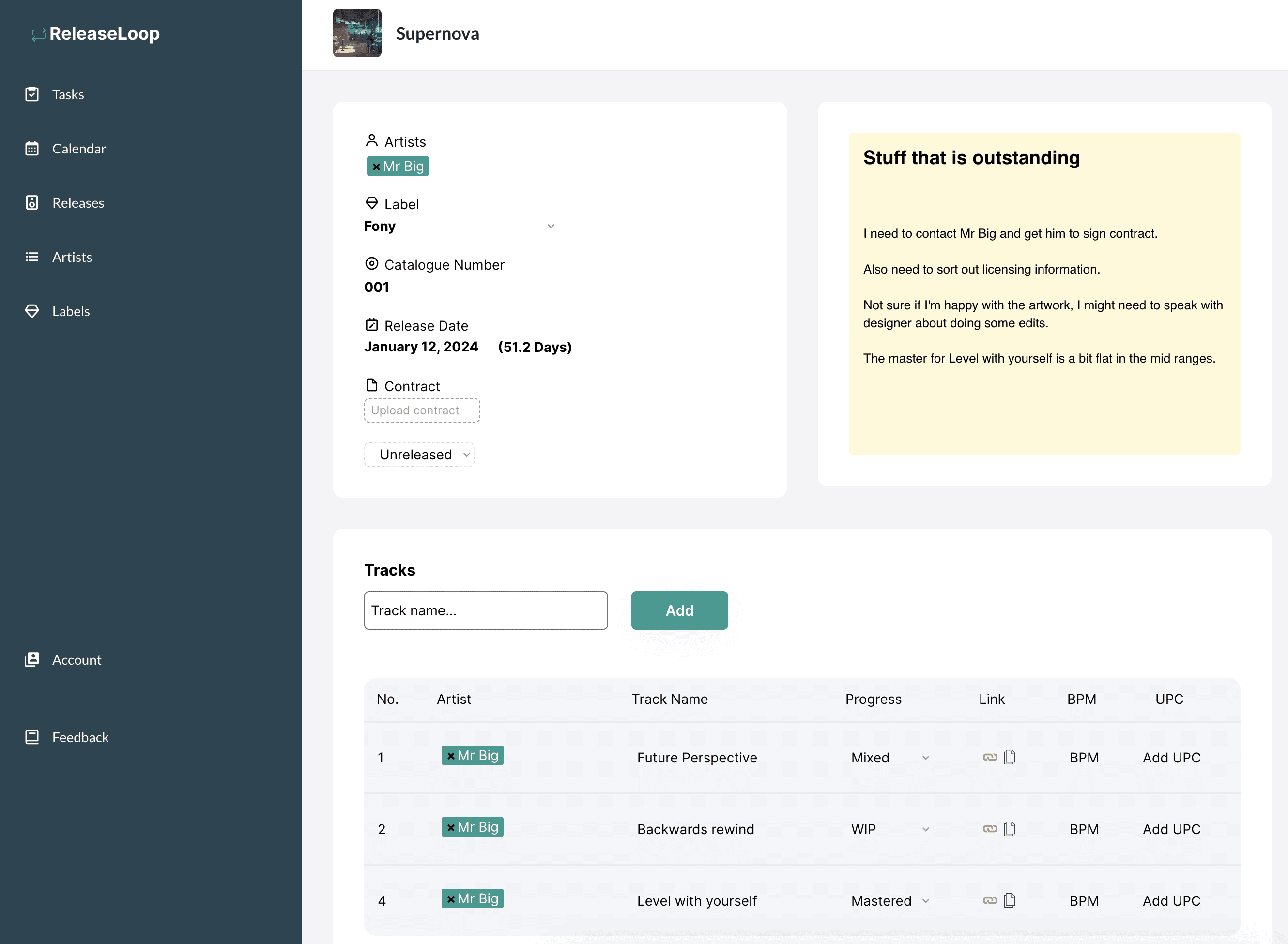
    • Tools offer an overview of the project, listing tasks and their completion status.

    Create a Release Calendar

    Creating a release calendar is fundamental in managing multiple releases. It gives a clear picture of each release’s timeline and helps avoid overlapping releases.

    • A visual representation of the timeline allows easy spotting of potential overlaps.

    • It’d be helpful to have a shared calendar that all relevant parties can access.

    Collaboration Strategies for Record Labels

    Nailing the art of collaboration can drastically up your game in the music industry. Working in harmony with artists, producers, and other vital players paves the way for a bi-directional exchange of ideas. Unleashing a powerhouse of creative synergies takes record labels to new heights.

    Regular Meetings with Artists and Producers

    Establishing coordination between record labels and artists can be a complex task, but it’s pivotal to the success of any music release. A clear understanding of what’s expected from each other simplifies the process while boosting the overall quality of the final product.

    Organizing regular meetings, either in-person or virtually, helps bridge the communication gap. This is your chance to catch up on each others’ progress and troubleshoot any existing issues. These meetings can be brainstorming sessions to discuss new ideas or enhancements for upcoming releases.

    Utilizing project management tools can also aid in streamlining communication between multiple team members. Tools such as Asana, Slack, or Google Drive empower teams with a platform for seamless collaboration. Make sure to update everyone for any tweaks or changes in the plan.

    Coordinating Marketing and Promotions

    Coordinating marketing efforts with the release schedule is another essential strategy to ensure the spotlight shines brightly on your latest launch. If your artist is dropping a fresh track, you want the world to know about it.

    Tease the fans with snippets and posters of the upcoming release on social media. Plan promotional activities like interviews, album listening parties or press releases right after the launch. Cross-promotion with other artists is an effective way to ripple your reach to an even wider audience.

    Timing and execution are critical here – releasing too much promotional content too soon can deflate the excitement, whereas delayed advertising does little good. Streamlining your promotional activities can enhance visibility and foster hype, making it easier to capture the attention of listeners worldwide.

    With careful planning and effective collaboration, you can smoothly manage multiple releases without any hitches. Learn from past releases, be open to feedback and never stop evolving. A good record label does more than orchestrate launches; it generously contributes to the music industry, helping create symphonies that resonate in millions of hearts.

    You’re now ready to chart your course in the exhilarating realm of the music industry. Go on, enthral the world with your harmonious symphony of unforgettable tunes.

    Conclusion

    The music industry’s whirlwind can feel daunting. But remember, with strategic planning, organization, and collaboration, managing multiple releases doesn’t have to be a Herculean task. Tackle challenges like overlapping release dates and limited resources by timing your releases wisely and leveraging your resources strategically. Don’t forget to announce your releases early to build anticipation.

    Your communication channels need to be crystal clear. Use project management tools and a release calendar to stay on top. Regular meetings with artists and producers, coupled with effective marketing and promotion strategies, are your keys to success.

    By harmonizing your efforts with all the key players and employing clever project management techniques, you’ll not only manage multiple releases effectively but also create a symphony of songs that’ll resonate with your audience. So go ahead, plan carefully, collaborate effectively, and let your record label create music that’ll echo in the hearts of millions.

  • Crafting a successful music release: The ultimate pre-launch checklist

    You’re gearing up for a big music release. You’ve poured your heart and soul into creating something extraordinary; now it’s time to share it with the world. But before you hit that launch button, there’s a crucial step you can’t afford to miss: preparation. It’s the key to a successful music release and what we’ll be diving into today.

    Have you ever wondered why some songs skyrocket to the top of the charts while others barely make a blip? It’s not just about the music but also the strategy behind the release. A well-prepared pre-launch can make all the difference between a hit and a miss. So, are you ready to learn how to give your music the best shot at success?

    In this article, we’ll be exploring a comprehensive pre-launch checklist for your music release. This isn’t just a to-do list; it’s a strategic plan to maximize your music’s reach, engagement, and impact. Whether you’re a seasoned pro or a newbie, this checklist is your secret weapon for a killer music release. So, let’s get started, shall we?

    The Power of Preparation: Music Release Pre-Launch Checklist

    The Importance of Preparation

    Preparation is the foundation upon which you build your music career; it’s about making great music and ensuring it reaches the right ears. The difference between a dud release and a chart-topping hit often boils down to the level of preparation. It also empowers you to anticipate challenges; when mishaps occur, you’re better equipped to navigate them.

    Setting Clear Goals

    A crucial part of preparation is Setting Clear Goals. You should define what success looks like for your music release. Whether it’s stream numbers, reaching new audiences, or getting radio airplay, it’s essential to have a clear target. Goals help to focus your efforts and measure your progress effectively. Here is when you make strategic decisions. Do you want to focus on promoting your new song to a specific demographic, or are you more interested in garnering international acclaim? When your goals are set, you’ve marked your destination. All that’s left is to plan the journey.

    Planning Your Timeline

    Moving to the next step, Planning Your Timeline is like drawing your roadmap to success. With a clear timeline, you coordinate your music release’s moving parts, from the initial recording session to the launch day. Every detail counts. For example, the period you choose to drop your single can significantly impact how well it performs. Not leaving enough time for marketing strategies to take effect could mean missing out on reaching potential fans. The scheduling of pre-launch activities like press releases, teaser campaigns, and social media promotions cultivate anticipation and generate buzz for your release.

    In the end, it’s the comprehensive pre-launch checklist that serves as the secret weapon for your successful music release. With it, you can maximize reach, engagement, and the impact of your music.

    Crafting Your Artwork and Visuals

    As you prepare for the release, it’s critical to ensure your visual brand matches the quality of your music. Remember, in the streaming era, your artwork isn’t just an album cover; it’s also promotional images, social media content, and tour posters.

    Designing Album Cover

    The album cover is often the first exposure potential fans get of your work. They’re scrolling through new releases on Spotify or Apple Music, and your album cover could catch their eye and get them to push play. It’s the first step toward turning those idle scrollers into fans.

    Think of your album cover as the face of your music on a streaming service’s grid. That’s a lot of weight for a tiny square to carry. Good design principles, like colour contrast and typography placement, can help your cover stand out in that crowded field. Remember, your album cover should reflect the music itself – both should work together to tell the same story.

    Creating Promotional Images

    Beyond the album cover, having various promotional images can help rouse interest and build anticipation. These might include:

    • Images from the recording studio.

    • Shots from music video filming.

    • Photos that tell a story behind the album’s theme or process.

    Despite the importance of promotional images, not every image needs to be a perfectly posed and edited piece of art—quite the opposite. Showing raw, authentic moments can convey personality and make you more relatable to your fan base.

    It’s also worth considering where these images will be seen. Instagram, Twitter, and Facebook all have specific guidelines for image dimensions. Adapting your pictures to each social media platform’s specifications can ensure they look their best wherever they’re viewed.

    Next up in your pre-launch checklist: planning your release announcement and public relations strategy.

    The Power of Preparation: Music Release Pre-Launch Checklist

    Perfecting Your Music

    Delving into the depths of creating your music masterpiece, two key components stand out that tie together the auditory threads weaving your musical tapestry: mixing and mastering. These bedrocks demand paramount attention on your pre-launch checklist.

    Mixing and Mastering

    Consider mixing as the procedure for moulding individual tracks into a harmonic unity. It’s the phase where each instrument shines – you control the dynamics, establish the stereo field tone shape, and pump up or dial down the volume. It’s an art of balancing and achieving intensity without drowning out subtly. Mixing paints the broad strokes of your sonic landscape.

    On the other hand, mastering is the cherry on top. It’s your final chance to catch any incongruities, balance the overall output and bring out the best sound in your mix. Mastering ensures a consistent listening experience across all platforms and devices. It’s about polishing, ensuring your music volume is industry standard, and applying the final equalization. Consider mastering as the magnifying glass that hones in on the minutiae.

    Remember, on your pre-launch journey, mixing and mastering are set to provide your audience with a seamless and engaging auditory experience.

    Choosing the Right Format

    With the growing technological advances, various digital formats are at your disposal. Your choice depends on your delivery method. Is it a digital release on Spotify or a vinyl pressing? Each format requires a different kind of master.

    MP3s are your go-to for streaming services. They’re compressed to reduce file size, with a potential quality loss. If you’re making an MP3, consider a bit rate of 320 kbps for optimum sound.

    For example, if your release is on physical media like a CD, consider WAV or AIFF file formats. They are uncompressed, offering top-quality sound at the cost of larger files.

    Finally, don’t forget the metadata attached to your digital files. It’s your digital footprint, connecting you with your listeners, ensuring proper credit and paving the way in royalty collection.

    Your music’s journey from the creation process to a ready-to-be-released masterpiece is exciting yet intricate. Tailor your work precisely, enhancing every aspect, and leave no stone unturned. It’s time to sound the trumpets for your upcoming music quest.

    Building Anticipation

    After nailing down the perfect mix and mastering your music, your artwork is on point, and the metadata is all set; don’t just let your masterpiece drop without warning. It’s time to stoke the fires of anticipation among your existing fanbase and potential listeners. This section will explore how you can build an aura of intrigue and expectation around your upcoming release.

    Engaging with Your Audience

    To create a buzz, start with your current audience. Think of fans, friends, family, and anyone previously connected with your music.

    Start by building relationships. Be active on your social media platforms, respond to your followers’ comments, and show them appreciation. Personal engagement is the key. After all, your fans will be your first ambassadors, spreading the word about your upcoming release.

    Another great tool to engage with your audience is mailing lists. Don’t underestimate the power of a captive audience that’s already expressed interest in your music. Shoot them an email, give them teasers of exclusive content, or share your journey towards your upcoming release.

    Teasers and Behind-The-Scenes

    Beyond personal engagement, sharing snippets of your work is crucial in building funky, hip, and mysterious vibes around your release. It’s about creating a story. Your audience wants to be part of your journey; they want to see what’s brewing in your studio and listen to the thoughts and inspirations behind your music.

    Teasers are not just snippets of your tracks; they’re glimpses into the soul of your upcoming release. Use them wisely and sparingly. Reveal just enough to whet the appetite but keep them wanting for more.

    Behind-the-scenes content is just as important. It’s about authenticity and showing your audience what goes into creating their favourite songs. Let them live your joy, your euphoria; let them share your struggles and victories. Show them the human behind the music.

    As you gear up for your music release, remember that anticipation is part of the experience. Take your audience on a journey. Every conversation, every teaser, every behind-the-scenes glance brings your audience one step closer to the big release day. And that, my friend, is the power of preparation in the music release process.

    Keep an eye on the next section, where we’ll move forward on the pre-launch checklist, looking into distribution channels and strategies.

    Distribution and Promotion

    Releasing your music is just the half of it. You’ve got to ensure your masterpiece lands in the right ears. Proper distribution and compelling promotion are the binding glue between your music and its audience.

    Choosing the Right Platforms

    Picking the right platform can significantly impact your music’s reach and success. Of course, the big-name platforms like Spotify and Apple Music are a given. YouTube Music and SoundCloud are excellent for their music-loving community.

    But, remember this. Your best platform is where your audience hangs out. If it’s TikTok, go for it. If it’s Bandcamp, don’t hesitate. It’s crucial to understand your audience. Moreover, consider platform-specific requirements. Each channel has unique needs concerning duration, format, rights, and restrictions.

    Creating a Marketing Plan

    Your release deserves the best presentation it can get. That’s where a power-packed marketing strategy comes into play. Here’s where you should focus:

    • Build a narrative around your music: Every music piece has a story. Make it yours. Create an engaging storyline around your release and avoid sounding promotional.

    • Create compelling multimedia: Remember, visuals complement audio. Plan for videos, cover art, and promotional photos that align with your music’s mood.

    • Sparkle social media: Your audience will likely be on one or many platforms. Ensure you have an engaging presence and keep them posted about your release.

    Remember, your marketing plan should be a continuum rather than a one-time activity. You’ve got to maintain the momentum before and after the launch. Aim for consistency while engaging your audience on their favourite platforms.

    Don’t worry; getting these right might seem like a challenge, but as long as you’re authentic and connect genuinely with your audience, you’ll see the results flow in. So, go ahead, distribute your music wisely and promote it passionately. Your audience is out there, waiting to groove to your beats.

    Analyzing and Adjusting

    Understanding data metrics and using that knowledge to make purposeful changes can be a game-changer in music. This process falls under a crucial phase in our music release pre-launch checklist – ‘Analyzing and Adjusting’.

    Monitoring Your Metrics

    As exciting as it is to work on your upcoming music release, keeping an eye on the numbers and data guiding your success is equally essential. Focusing on these metrics and analyzing them in detail forms a significant part of your music release preparation.

    Various online tools can help you monitor your music’s performance, giving you a comprehensive look at your listeners and the digital footprint you’re making. Be it how well your previous releases have performed or the traction they’ve garnered in different regions, monitoring these numbers can help you calibrate your new music launch successfully.

    Making Changes Based on Data

    While you’re getting ready to launch your music, an important aspect to consider is how adaptable you are to change. Creating stellar music is only part of the battle; the real challenge lies in adjusting your strategies based on the data you’ve collected.

    When you analyze your metrics, you might find patterns and trends that call for tweaks in your current plan. You may need to slightly alter the visuals, change a release date to match trending seasons, or experiment with new promotional tactics. Paying heed to your data-driven insights benefits your upcoming music release and helps create a strong foundation for future projects.

    Understanding your metrics and making changes based on them ensures your music meets market trends and exceeds audience expectations. This strategic mindset will leverage your music marketing in ways you’ve never imagined. The power lies with you: are you ready to embrace your data and make the necessary adjustments?

    Remember, launching a music release isn’t just about the steps you take before the release. It’s also about your actions after getting your music out there. The process of analyzing and adjusting is ongoing. Keep an eye on your metrics, maintain flexibility in your approach, and, most importantly, stay true to your artistry. That’s how you make your music releases successful every single time.

    Conclusion

    Your music release isn’t just about the tunes—it’s a complete package. Every element should resonate with your unique sound, from artwork and visuals to mixing and mastering. Remember, your digital release needs to be in the correct format, and metadata is critical.

    Building anticipation is a crucial step. Engage with your audience, use mailing lists, and share teasers to create a buzz. But don’t stop there. Proper distribution and promotion are vital to ensure your music hits the right ears. Choose platforms that suit your target audience and meet platform-specific needs.

    Your marketing strategy should be as dynamic as your music. Craft a narrative, create engaging multimedia, and maintain a vibrant social media presence. Be authentic and passionate; your audience is eager for your beats.

    Lastly, don’t overlook the power of data. Analyze metrics, gain insights, and adjust your strategy accordingly. This isn’t a one-and-done process—it’s ongoing. Stay true to your artistry and keep refining. Your music release is a journey, and with the proper preparation, it’ll lead to success.


  • How to efficiently organize and manage music artists

    Managing your artists effectively is no small feat. It’s a task that requires finesse, patience, and a well-structured plan. Whether you’re a seasoned manager in the music industry or just starting, organizing your artists is critical to your job. It’s not just about scheduling gigs or recording sessions—it’s about steering your artists’ careers in the right direction.

    You may be wondering “how I can manage my artists more efficiently.” Or perhaps you’re asking yourself, “What’s the best way to organize my artists to ensure their growth and success?” Well, you’re in the right place. This article will provide valuable insights and practical tips to help you streamline your artist management processes.

    Setting Up Your Artist Management System

    Designing a robust system that meets the unique needs of each artist you manage is essential. You’ll need to define clear goals, determine your key artists, establish effective communication channels, and create a centralized database to streamline your strategies and efforts.

    Define Your Goals and Objectives

    A well-defined set of goals and objectives provides direction and a foundation for your artist management strategy. Without these, you’ll find deciding what steps to take challenging. Define the vision for your artists and align their personal goals with your management tactics, fostering mutual growth and success.

    Here is a simplified way to get started:

    • Define the vision for each artist

    • List short-term and long-term goals

    • Identify specific steps to achieve these goals

    • Regularly review and adjust plans based on progress and changes

    Identify Key Artists and Talent

    Effective artist management isn’t about juggling as many artists as possible; it’s about nurturing and guiding the right individuals. Understanding your artist’s unique talents, passions, and potential is critical.

    Consider these factors:

    • Artist’s work ethics

    • Talent and unique attributes

    • Marketability and target audience

    • Compatibility with your vision and goals

    Establish Communication Channels

    Open and regular communication is fundamental to your relationship with your artists. Establishing clear communication channels ensures that all parties are always on the same page.

    Experiment with various models and platforms until you find what works best. The goal is to create an environment where you and the artist can comfortably share updates, ideas, concerns, and praises.

    Create a Centralized Database

    A centralized database allows you to keep crucial information about your artists in one accessible place. This solution isn’t just helpful in keeping track of contracts and financial records; it’s also vital in storing data on your artists‘ fan demographics, social media statistics, and other key performance indicators that drive decision-making.

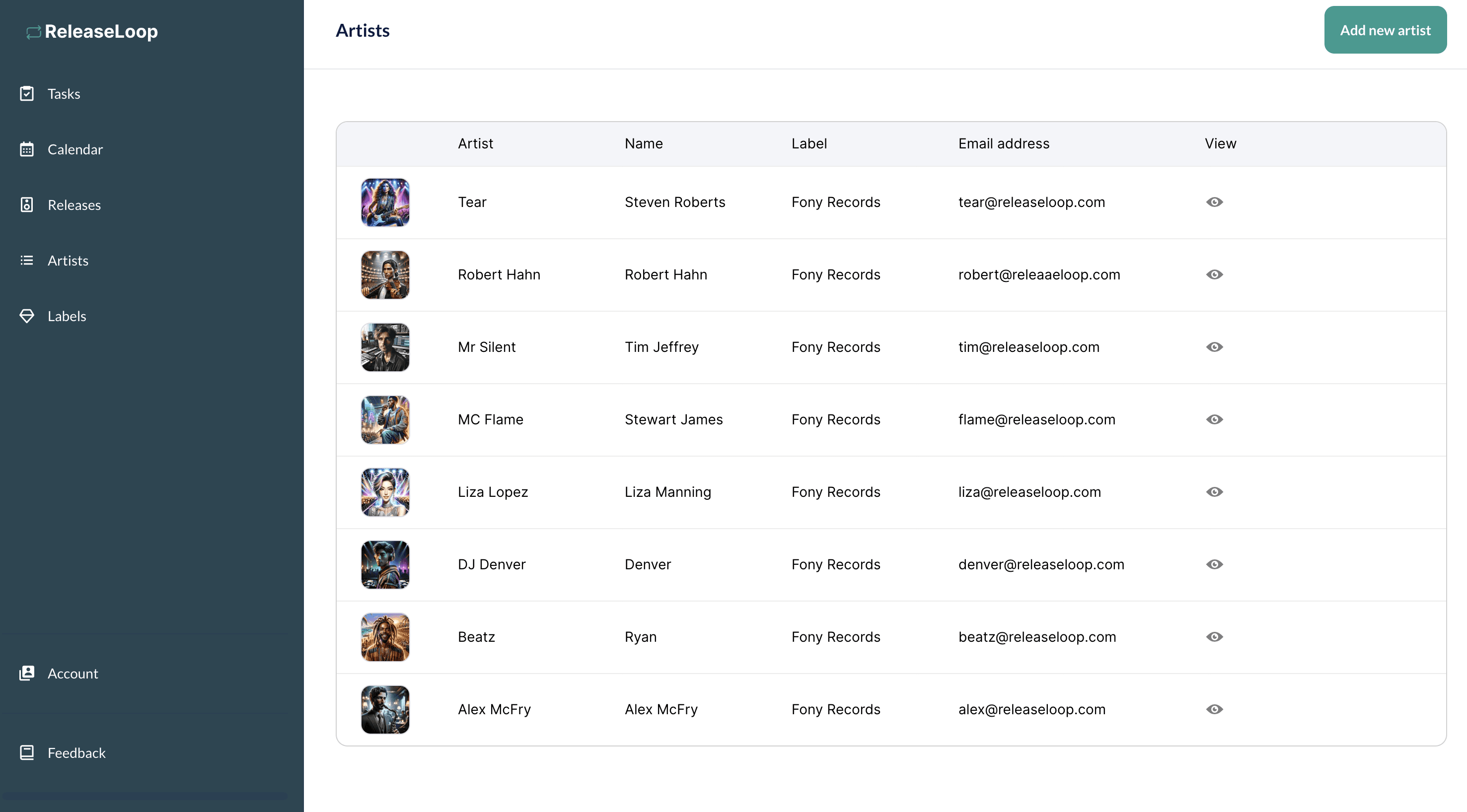
    At ReleaseLoop, we have the artist CRM, allowing you to save information about your artist and their releases. 

    Establishing a well-organized artist management system is a strategic move toward ensuring the growth and success of your artists. Stay focused, keep your communication lines open, and remember to review, adapt, and improve your strategies constantly.

    Building Strong Relationships with Artists

    Relating with artists isn’t just business. It revolves around more than negotiations and contractual agreements. Building solid relationships with your artists is critical to achieving success in the music industry. It blends clear communication, consistent support, and collaborative projects. Here’s how to efficiently organize and manage your artists.

    Regular Communication and Updates

    To maximize the potential of your artists, communication should be your topmost priority. Pass clear, concise, and timely information to your artists. They need to be aware of your plans and expectations. Regularly update them on their project progression and future schedules.

    Also, listen to their interests and ideas. Their creativity is their most valuable asset – do not stifle it. Consider their input in significant decisions. This gives them an active role in their career development and creates a positive work environment. Understanding and respecting their individuality builds trust and drives collective success.

    Providing Support and Resources

    You’re not just their manager – you play the role of their pillar, their fallback, and their resource provider. Artists often face trials such as creative blocks, performance anxiety, and public image matters.

    • Offer advice and solutions to their problems.

    • Link them to other industry professionals such as image consultants, vocal coaches, or music producers.

    • Connect them to valuable resources in the industry,

    • Provide platforms to aid their continuous growth and development.

    Help them be the best they can be! Your unwavering support will inspire their loyalty and commitment to the team’s success.

    Collaborating on Projects

    Optimize the diverse talents of your artists through collaboration. Let the uniqueness of one artist complement the other – incredible synergy can be born.

    • Involve various artists in joint projects.

    • Encourage collaborations between your artists and external industry players.

    • Promote their collective works.

    Explore the unlimited possibilities of team synergy. It strengthens bonds, enhances artistic exposure, and promotes shared success.

    How to Efficiently Organize and Manage Your Artists

    Streamlining Administrative Tasks

    Just like in any industry, dealing with administrative tasks is a crucial aspect of managing artists in the music industry. Mastering these tasks is essential to ensure smooth operations, minimize potential problems, and provide the necessary support for artists to shine.

    Contract and Agreement Management

    To successfully manage artists, clear and concise contracts are crucial. Outlining expectations, responsibilities, and commitments helps keep all parties on the same page. You’re not just maintaining professionalism. You’re also setting the stage for a healthy working relationship.

    Here’s where tools come into play. With contract management software, managing contracts becomes a breeze. You can track deadlines, renegotiations, special clauses, and more. The right tool will provide a consolidated view of all contracts, making it easier for you to manage and address issues promptly.

    Handling Financial Matters

    Taking care of an artist’s finances is one of your key responsibilities. You’ll need to handle multiple financial aspects like booking fees, advances, royalties, and expenses.

    Opt for an efficient accounting system that allows you to track and manage all financial transactions. While you must oversee these matters, having regular financial conversations with your artists is just as important. Being transparent helps build trust and gives them a good understanding of their financial standing.

    Tracking and Analyzing Metrics

    In business, data is power. That’s especially true in the music industry. Digital platforms can provide a wealth of data about listeners and trends. Effectively tracking and analyzing these metrics can help position your artists for success.

    To keep on top of these numbers, use a reliable analytics tool. Spotify and Apple Music both have robust tools. Analyze critical metrics like streaming numbers, followers, and engagement rates. You can use this data to guide strategy and make decisions based on accurate, actionable information.

    In the end, streamlining administrative tasks is an ongoing effort. Each step contributes to building a robust management framework that supports your artists’ growth, development, and success.

    Developing an Effective Promotion Strategy

    Let’s shift gears and discuss the promotional aspect. A well-strategized promotion campaign not only maximizes the artist’s exposure it also works to magnetize the right audience. Let’s break this down into three key areas you must focus on.

    Crafting Compelling Press Kits

    A press kit isn’t just a bunch of images or videos. It’s your artist’s first impression of the media, record labels, booking agents, and the audience. So, you must create a press kit that’s not only visually appealing but also tells a story – a story that’s uniquely your artist.

    • Images: High-quality, professionally taken photos can significantly enhance the impact of your press kits. Remember, these pictures should reflect your artist’s brand identity.

    • Bio: Your artist’s biography isn’t a resume. It’s a story. Aim to strike a chord with the reader, conveying the artist’s journey and passion.

    • Music: Include samples of your artist’s best work. Make it accessible and easy to listen to.

    Implementing Social Media Campaigns

    Social media cannot be overlooked in today’s digital-driven world. With millions of users, platforms like Instagram, Twitter, and Facebook provide ample opportunities to get your artists the limelight they deserve.

    • Quality Over Quantity: Instead of bombarding your followers with constant updates, share quality content that offers value. This could be a behind-the-scenes look, unreleased tracks, or even Q&A sessions.

    • Consistency: A consistent posting schedule will ensure you stay at the forefront of your followers’ minds.

    Networking and Partnering with Industry Professionals

    Like any other industry, the music business heavily relies on networking and professional partnerships. Building relationships with influencers, media professionals, and fellow artists can open up new avenues for promotions.

    • Events and Conferences: Attending music conferences and industry events is a great way to network. Have your business cards ready, and don’t shy away from initiating conversations.

    • Collaborations: Collaborations can significantly widen your artist’s reach. Whether featuring other artists on tracks, performing concert guest acts, or partnering with brands, any relevant collaboration can be a step toward success.

    Promotion- crafting compelling press kits, implementing effective social media campaigns, or networking with industry professionals- is crucial to managing your artists. Remember, every artist is unique, so adapt and tweak your promotional strategies to suit their style and brand.

    Your professionalism and passion for your artists and their music will ultimately set you apart in the music industry. Stay tuned as we explore more facets of artist management in upcoming sections.

    Conclusion

    Efficiently managing your artists isn’t just about the business side of things. It’s about making sure administrative tasks like contract management, financial handling, and metric tracking are streamlined. Remember, clear contracts set the stage for professional relationships. Efficient accounting systems and regular financial discussions build trust. Using robust analytics tools, you’ll gain insights to guide your strategies and decisions.

    But it’s not all paperwork. Your promotion strategy is critical. Craft compelling press kits, launch effective social media campaigns, and network with industry pros. Remember, each artist is different. Tailor your strategies to fit their unique style and brand.

    Ultimately, your professionalism and passion for your artists and their music set you apart as a manager. So, keep refining your management skills, stay passionate about your work, and watch your artists flourish.

  • Pros & Cons of Project Management Tools for Record Labels

    When releasing music, staying on top of every beat is crucial. That’s where project management tools strut onto the stage, promising organization and efficiency for record labels like yours. But are they the chart-toppers they claim to be?

    You’ve probably wondered if these tools hit the right notes when managing artists, album releases, and promotional campaigns. They offer an array of features, but can they handle the unique crescendos of the music industry? Let’s dive into the rhythm of pros and cons to find out if they deserve a standing ovation or if it’s time to cut the track.

    The current picture of tool utilization in project management for record labels

    You may have noticed a growing trend: more record labels are turning to project management tools to keep tabs on their music production processes. But what’s the actual score on their effectiveness?

    Project management software isn’t just a fancy digital helper – it’s a crucial asset when juggling multiple artists and releases. Imagine tracking your artist’s studio time, aligning promo schedules, and distributing tasks among your team, all from one platform.

    Despite these perks, the adoption isn’t always smooth. Some label owners dive in without a strategy, leading to less-than-stellar results. Here’s where understanding the why behind your tool choice makes a difference. You might want to pause and reassess if you’re picking a tool just because it’s popular or recommended.

    Common Mistakes and Misconceptions

    • Choosing complexity over utility: The flashiest tool isn’t always the best fit. Avoid going for software that’s overcomplicated for your needs.

    • Ignoring team input: Always involve your team in the selection process – they’re the ones who will use the tools daily.

    • Neglecting training: Don’t assume everyone will intuitively know how to use new software. Invest in training to maximize its benefits.

    To sidestep these pitfalls, start by clearly defining your needs. What specific problems are you aiming to solve with project management software?

    Techniques and Variations in Tool Use

    Depending on your label’s size and scope, different tools offer varying levels of functionality. Tools with essential features like task assignments and deadline tracking might be all you need for managing smaller teams or more straightforward projects. However, consider tools that offer detailed analytics and real-time collaboration features for more complex releases involving numerous stakeholders.

    Remember, the right tool should align with your workflow, not complicate it. Test different tools with your team, gather feedback, and consider how the software integrates with your daily operations. Over time, you’ll notice improvements in efficiency and communication, provided you’ve chosen a tool that meshes well with your label’s needs.

    The benefits of using a dedicated project management tool

    Having a reliable project management tool can be a lifesaver when managing a record label. These tools, like ReleaseLoop, tailor the experience to fit the unique challenges of the music industry. Let’s dive into the advantages they bring to the table.

    Streamlined Release Planning

    With features such as release planning, you can keep track of your project on the beat. This means aligning singles, albums, and all promotional activities precisely. Furthermore, dedicated project management software often provides a visual release calendar—essential for ensuring you drop your tunes at the perfect moment to maximize impact.

    Simplified Artist Collaboration

    Using a project management tool with an artist CRM system lets you maintain all your artist relationships and communications in one place. It’s easy to mismanage crucial details when juggling multiple artists, which can strain relationships and delay productions. By having all the details centralized, you’ll Improve your collaborations and keep things in sync.

    Kanban for Creatives

    The adoption of kanban boards by record labels is a game-changer. This lean method helps you visualize workflow and manage creative processes more efficiently. However, your team might not reap all the benefits without proper training. Ensure everyone’s on the same page about using these tools effectively.

    • Visualize Workflow: Track the progress of various tasks at a glance.

    • Boost Productivity: Identify bottlenecks and streamline operations.

    Operational Integration

    Opting for a project management tool designed specifically for record labels means the features are optimized for industry-specific tasks. You want to ensure your chosen tool seamlessly integrates with your daily operations. The right tool doesn’t just fit—it enhances your workflow, making complex processes more manageable.

    Remember, no single tool suits every label. Your operations might differ vastly from the next, and finding a solution that matches your size, scope, and working style is crucial. Take advantage of free trials and demos, involve your team in decision-making, and observe how the tool performs in real-world scenarios. This practical approach ensures that you choose a tool that hits all the right notes for your team when you commit.

    Address common concerns or disadvantages and provide solutions or reassurances.

    Record label owners often have pressing concerns when venturing into project management tools. Understandably, you may worry about the challenges these technologies might pose. Let’s tackle this head-on.

    Data Security is often at the forefront of your mind. It’s crucial with sensitive artist information and unreleased tracks on the line. Choosing a tool with robust security protocols is non-negotiable. Look for features like end-to-end encryption, two-factor authentication, and regular security audits. These will help ensure that your valuable assets are protected.

    Costs can cause anxiety, especially for smaller labels. High-quality project management tools come with a price. But always remember, this is an investment in efficiency. To mitigate financial strain, start with basic plans and scale up as your requirements grow. Many providers offer scalable solutions tailored to the size and needs of your business.

    Adoption by your team poses another concern. You’re dealing with creatives who may not be keen on rigid systems. It’s essential to select user-friendly tools that provide a seamless learning curve. Involve your team in the decision-making process and offer comprehensive training. This approach promotes a positive attitude towards adopting the new system.

    A misconception worth noting is that these tools will replace personal interaction. They won’t. They’re designed to enhance collaboration and allow more time for the human touch. Tools with built-in communication features enable your team to stay connected in a more organized manner.

    Effective Release Planning: Avoid the misstep of undervaluing proper release scheduling. A dedicated project management tool helps avoid clashes and missed deadlines.

    Here are a few practical tips to ensure you’re on the right track:

    • Conduct regular check-ins to gauge the tool’s effectiveness

    • Prioritize features that align with your label’s specific requirements

    • Encourage continuous team feedback on the tool’s usage and features

    Depending on the size of your label and the scope of your projects, you may want to explore tools with different capabilities. Some are more suited for intense project tracking, while others excel at collaborative features or integration with other apps and services your label already uses.

    Conclusion: The overall value of using dedicated project management tools in the music industry.

    You’ve seen how project management tools can revolutionize your record label’s operations, from release planning to artist collaboration. They’re about keeping tasks in order and enhancing the creative process with structure and efficiency. Remember, while these tools offer numerous benefits, addressing potential concerns head-on is vital to ensure your team is on board and your data stays secure. Choosing the right tool is about balancing functionality and ease of use. Embrace the change, involve your team, and you’ll find that the right project management tool is an indispensable ally for your record label.

  • The Vital Role of Strategic Planning for Record Labels

    If you’re in the music industry, you know it’s not all about the glitz and glamour. Behind every chart-topping hit, there’s a well-oiled machine operating in the background. That machine? Strategic planning. It’s the backbone of any successful record label and is more critical now than ever.

    Have you ever wondered why some record labels seem to have the Midas touch, turning every artist they sign into gold? It’s not just luck. It’s about having a clear, well-thought-out plan. A strategic plan that not only focuses on the present but also anticipates future trends and changes in the music industry.

    So, what’s the big deal about strategic planning for record labels? Stick around, and you’ll find out. You might just discover that it’s the missing piece in your label’s puzzle, the secret sauce that takes your artists to the top of the charts.

    Understanding the Record Label Industry

    As a record label, the more knowledgeable you are about the industry, the better your strategic planning will be.

    Evolution of Record Labels

    In the early days, record labels held the keys to all music production, distribution, and promotion. Major labels owned the pressing plant’s distribution centers and had exclusive contracts with radio stations for airtime. As an artist, if you wanted a record out there, you’d need a label behind you.

    Fast forward several years, technology and the advent of the internet changed the game. Small indie labels sprang up; artists began producing and distributing music online. Power shifted somewhat from record labels to the artists themselves. Record labels had to adapt quickly. It is a continuous evolution, and your brand needs to stay ahead of the game.

    Current Challenges for Record Labels

    The music industry is not without its hurdles, and record labels today face unique challenges. Physical sales have steeply declined with the rise of digital music and streaming platforms. Maintaining profitability becomes tougher as physical copies lose ground to their digital counterparts.

    Another major challenge is music discovery. With millions of tracks being uploaded to streaming platforms daily, it’s no easy feat to stand out. Marketing and promotion techniques have had to evolve, and keeping abreast of changes in the marketing landscape is vital.

    Piracy and copyright infringement also pose significant concerns. On one hand, you’ve got the problem of unauthorized sharing and downloading digital music. Conversely, the issue of artists sampling and borrowing beats without necessary permissions is equally troubling.

    As a record label, understanding these challenges will shape your strategic planning and help you stay one step ahead. By acknowledging the industry’s past, recognizing its current landscape, and anticipating future trends, you build a robust blueprint for your record label’s success. Don’t forget knowledge is power.

    Benefits of Strategic Planning for Record Labels

    Strategic planning is undoubtedly an essential success ingredient within the music industry, providing numerous benefits. Understanding and leveraging these benefits will better position your record label amid the evolving landscape.

    Enhancing Long-Term Vision

    Strategic planning sharpens the long-term vision for your label. It’s not just about surviving the current wave but also about thriving in the future. Consider changes in music consumption habits, technology advancements, or shifts in the artist-fan relationship. By looking beyond present challenges, strategic planning helps sketch a roadmap to the future. With a clear long-term vision, you’re not left baffled by unforeseen trends or sudden market shifts.

    Identifying and Capitalizing on Opportunities

    Strategic planning aids in the identification of untapped channels and opportunities. The internet and technology have empowered artists like never before. They are now releasing music independently, organizing global tours, and building fan bases online. Conversely, record labels might feel sidelined. However, with strategic planning, you can switch this narrative. Explore pivoting and integrating with these new trends instead of fighting against them. There’s room for record labels in this new age – it’s all about spotting the right opportunities.

    Mitigating Risks and Uncertainty

    Sailing in anyone’s business faces risks and uncertainties, and so does the music industry. Music labels are up against inevitable challenges like copyright infringement or declining physical sales. Strategic planning steps up here, providing shields to mitigate these risks and uncertainties. It helps map out unexpected hurdles, proposes solutions, and crafts contingency plans. So, when a crisis hits, you’re not thrown off balance; you have your battle plan ready.

    Finally, strategic planning helps navigate the complexities of the music industry. It invites you to step up as a forward-thinking record label ready to adapt, innovate, and succeed. While the industry continually evolves, your strategic plan is your guide, helping you keep up.

    The Importance of Strategic Planning for Record Labels

    With the music scene’s dynamic nature, strategic planning is an inevitable necessity that record labels must master. Strategic planning doesn’t just help you foresee changes, but it also allows you to prepare and adapt effectively. Let’s dig into some primary elements forming the backbone of successful strategic planning for record labels.

    Setting Clear Goals and Objectives

    First and foremost, define your targets. You must understand where you’re heading and what you aspire to achieve. Goals and objectives act as a compass, guiding your label and driving all actions. Do you aim to discover new talent? Or perhaps to leap into the international market? Your goals set the tone for everything, from marketing strategies to harnessing resources and building business relationships.

    Market Research and Analysis

    In-depth market research is fundamental for your label’s survival and scalability. Embrace the habit of scrutinizing the market, and be ready to adapt to shifting trends. Various elements, such as emerging music genres, the performance of similar record labels, and the response to new music formats, are vital to identifying opportunities and avoiding potential pitfalls.

    Financial Forecasting and Budgeting

    Financial projections are vital in shaping your label’s future strategies and decision-making. You’ll need to consider the sales potential of your artists, marketing budgets, and prospects for future investments. Sensible budgeting ensures that you’re prepared for the financial demands of running your label. Adequate financial planning helps avoid cash-flow problems, ensuring readiness to seize opportunities as they arise.

    Talent Acquisition and Development

    Finally, talent forms the core of your record label’s success. Finding fresh, phenomenal talent isn’t solely enough; there should also be a scheme for their development. Training and nurturing talent fosters a continuous stream of quality music for your label. From spotting talents as budding artists and supporting their growth to developing substantial working relationships, be prepared to concentrate on talent acquisition and development.

    Incorporating these critical components into your strategic planning process paves the road for successful outcomes. With intent, clear-sighted objectives, informed marketing research, sound financial planning, and an unceasing focus on talent development, you’re shaping an invincible foundation. In the face of a rapidly evolving music industry, these strategic planning basics assure a robust, flexible, and future-ready record label. And the journey’s just started – there’s much more to explore and investigate about strategic planning! Don’t stop at these fundamentals; the music world is filled with fantastic opportunities waiting for those ready to seize them.

    Implementing Strategic Plans in Record Labels

    As an existing or prospective record label, you’ve realized that strategic planning isn’t just for corporate industries. It’s an integral part of your everyday decision-making process.

    For example, ReleaseLoop can manage release planning, here’s a screenshot of our release page.

    Creating Action Plans

    Though you might have a fantastic long-term vision, how will you get there? Developing action plans acts as your roadmap. This process should etch out each step you need to take and break down your lofty goals into bite-sized ones. Consider what each plan does to contribute to your overall objectives. Think of these as the legs that hold up the table of your success.

    The action plans could range from marketing approaches, talent nurturing programs, and social media campaigns. Each of these needs careful planning, clear objectives, and an understanding of your target audience.

    Allocating Resources

    Next, make sure resource allocation complements your action plans. That’s not just about budgeting your finances; it also includes human resources, time, and effort. The aim is to optimize efficiency, and an unbalanced distribution could strain one area while leaving another resource idle.

    Invest more time and effort in sectors that demonstrate the most potential or require improvements. Adjust and relocate resources according to the shifting music landscape and trends. By maintaining a flexible approach, you’re ensuring that no opportunity will be missed.

    Monitoring and Evaluation

    Finally—you don’t just set plans into motion and forget them. You must constantly ask: Are you heading towards your goal or moving away from it?

    Consistent monitoring and evaluation is your answer. This isn’t just about tallying profit and loss. It means tracing your steps and understanding what worked and what didn’t.

    Tracking metrics, performance of critical operations, and market responses would provide valuable data to make informed decisions. Begin by setting up Key Performance Indicators (KPIs) and use them to assess if your strategies align with overarching company goals.

    This ongoing process gives you a clear perspective on how far you’ve progressed, what needs enhancing, and when a pivot might be necessary.

    As you can see, implementing your strategic plans involves a bird’s eye view of your business. It requires constant vigilance, regular realignment, and objective focus. So, keep your dreams dynamic, forward-looking, and grounded in your vision to navigate your path in the ever-changing, exciting world of music. Dive headfirst into this journey, and you’ll realize it’s not just about hitting the high notes—but orchestrating the entire symphony.

    Successful Examples of Strategic Planning in Record Labels

    With a clear understanding of strategic planning basics for record labels, it’s time to explore real-world examples. Let’s hone in on some industry titans and dissect how they’ve implemented their strategies.

    Case Study: Universal Music Group

    Universal Music Group (UMG) has consistently ranked as one of the top three record labels globally. Their success doesn’t settle on luck; it’s the outcome of innovative and strategic planning. UMG has always been ahead of technological advances, foreseeing the digital music revolution before most competitors. Let’s discuss two critical components of their strategic planning.

    1. Embracing Digital Platforms: While other labels struggled with the advent of digital music, UMG optimized its strategy to cash in on this innovative format. They were ahead of the curve in negotiating deals with digital platforms, ensuring their artists’ music reached the maximum number of listeners.

    2. Artist-Focused Approach: UMG believes that an artist’s success equals their success. Focusing on identifying and nurturing talent, they’ve created a star-studded roster that continually tops the charts. This focus on their artists’ success has yielded high returns, proving that investing in talent is never a bad strategy.

    Case Study: Sony Music Entertainment

    Sony Music Entertainment (SME) also stands out as a leader in strategic planning within the music industry. SME’s approach is broad, focusing on artist development, global reach, and adopting digital platforms. Here are the main elements of their strategic planning:

    1. Expanding Global Footprint: SMEs have always adopted a global perspective, exploiting worldwide opportunities for their artists. They’ve successfully marketed their artists to a vast global audience through innovative collaborations and deals.

    2. Digital Transition: Just like UMG, SMEs have realized the importance of digital music and made it a core part of their strategy. They’ve also focused on data analytics, using these insights to make informed decisions about promotion and marketing.

    Both UMG and SME showcase the impact of robust strategic planning in achieving success in the complex music industry. By understanding and adapting to digital trends, focusing on their artists’ success, and expanding their global reach, these labels remain at the forefront of the industry. The key takeaway here? Successful strategic planning requires constant adaptation and a keen awareness of industry changes and trends. Without this, even the most well-intentioned plans risk falling short. Focusing on the crucial elements discussed—nurturing talent, embracing digital platforms, and global expansion—will put your record label on the track toward long-term success.

    Conclusion: The Future of Strategic Planning for Record Labels

    Strategic planning has proven its worth in the music industry. It’s the guiding force behind the success stories of industry giants like Universal Music Group and Sony Music Entertainment. Their strategic planning approaches, although different, have one thing in common – adaptation to the ever-evolving music landscape.

    UMG’s artist-centric approach and early adoption of digital platforms have set them apart. SMEs’ global expansion and embrace of digital music have been instrumental in their success. These examples clearly show that strategic planning isn’t a one-size-fits-all approach. It’s about understanding your label’s strengths, identifying opportunities, and mitigating risks.

    The future of strategic planning for record labels lies in constant adaptation and a keen awareness of industry changes and trends. Remember, it’s not just about surviving in the industry but thriving. So, keep your eyes on the horizon, adapt, and plan strategically. Your label’s success depends on it.

  • Mastering Efficient Task Management in the Music Industry: Strategies for Success

    Efficient task management is not just beneficial in the music industry; it’s a fundamental skill for keeping up with an array of responsibilities, from recording to promotions.

    Many industry professionals find themselves overwhelmed by their workload. However, this doesn’t have to be the case. There are proven methods and tools that can streamline your routines and elevate your productivity.

    Imagine having your tasks neatly organized, deadlines consistently met, and completeness in every project. Efficient task management makes this possible, transforming disorganized efforts into a well-tuned orchestration of productivity.

    The Necessity of Task Management

    The music industry operates at a relentless tempo, which makes an organized approach to task management indispensable. Each component of album production, from songwriting to distribution, carries its own complexity and schedule. A missed deadline can cause ripple effects throughout the production process. By effectively tracking these responsibilities, you ensure a polished album release.

    Professionals facing difficulties in juggling their tasks can see significant improvements by adopting strategic approaches. These include delegating responsibilities, prioritizing tasks based on their impact and urgency, and treating mistakes as learning opportunities. Digital tools, like ReleaseLoop, are invaluable for bringing an organizational advantage to your workflow.

    Mastering task management strategies could propel your career and lead to a more balanced life.

    Strategies for Task Management

    The music industry presents unique challenges. Viable task management strategies help you navigate through this terrain and maintain harmony.

    Goal-Setting and Prioritization

    Start with clear, SMART goals to guide your projects amidst rapid industry changes. Then, employ a system like the Eisenhower Decision Matrix to sift through daily tasks and determine what needs immediate action versus what can be deferred.

    Communications and Project Management Tools

    Create robust communication channels to prevent critical information from being lost in endless email threads. Tools such as Slack can enhance team transparency and agility.

    Also, project management tools like ReleaseLoop and Trello provide visual aids for task assignments and deadline tracking, keeping everyone aligned and informed about project status.

    Efficient task management leads to increased productivity, optimized time management, and stronger collaboration. You’ll find that a systematic approach to tasks allows for better focus, fewer distractions, and a harmonious team environment.

    Challenges and Overcoming Them

    Challenges like managing multiple projects, handling last-minute changes, and balancing creativity with administrative tasks are common in the industry.

    You can address these by maintaining a prioritized, up-to-date schedule and preparing backup plans for unforeseen issues. Allocate time for creativity when your energy peaks, and automate administrative tasks whenever possible for greater efficiency.

    Best Practices in Task Management

    To ensure effectiveness:

    1. Keep comprehensive to-do lists and schedule flexibly to accommodate the unexpected.

    2. Track your time using tools like Clockify to gain insights into time allocation.

    3. Delegate tasks meticulously, reserving your focus for strategic and creative endeavors.

    Conclusion

    Task management in the music industry is not just beneficial; it is necessary. It ensures productivity and fosters an environment conducive to success. Prioritizing effectively, using digital tools to stay organized, and maintaining open communications are all part of this process. Ultimately, being adept at managing your tasks means more time for creative work and a potential for a rewarding career trajectory. Efficiently handled tasks also lead to detailed planning and better outcomes, making the mastery of these techniques vital for anyone looking to thrive in the dynamically-paced music industry.

  • How to use ChatGPT for your record label

    At a casual glance, OpenAI’s ChatGPT, an advanced AI conversation model, may seem inadequate for managing record label operations. Yet, when you pair it with tailor-made guidance and practical use, it transforms into an uncompromised aid that reshapes how record labels function.

    Understanding ChatGPT in Record Labelspheres

    Inherent to all AI models, ChatGPT shows an inclination towards specific structures and phrases when generating responses. Like any well-built machine, the “input equals output” principle holds. Thus, carelessly feeding it with vague commands like “I want my label to grow” only yields broad and less insightful responses.

    Precision with ChatGPT

    However, the real power of interacting with ChatGPT unveils itself when we ditch generic questions in favor of carefully phrased, detailed queries. Rather than “I want my label to grow,” use “In what ways can I strategically expand my record label’s reach and financial growth while nurturing the development of my current artists?” This precision flips the AI from giving a standard output to a top-notch, insightful one.

    Transformative Guidance to ChatGPT: A Mindmap

    Understanding these subtleties can be so transformative that it becomes life-changing for your label. To assist in unlocking this potential, I’ve curated a helpful mindmap welcoming you to the practical usage of ChatGPT for your record label.

    Embracing AI for Record Labels

    AI might seem a new, intimidating terrain, particularly concerning music, an area historically person-centric. However, embracing it and adjusting our approach to AI tools like ChatGPT can yield significant benefits. 

    Gaining an edge lies in posing thoughtful and precise questions, transforming ChatGPT into a game-changer that drives the growth of your record label.